Why Does the Season Matter So Much on the Manaslu Circuit?
The Manaslu Circuit is not like the Annapurna Base Camp Trek or Poon Hill, where a bad weather day means you miss a view. On this route, weather determines whether you can physically cross the highest point of the trek, Larkya La Pass at 5,106 meters in Gorkha District.
The trail climbs from about 700 meters at Soti Khola through subtropical forest, crosses the Budhi Gandaki River valley, and pushes through alpine terrain above Samagaon (3,530 meters) and Samdo (3,860 meters) before the pass. That is a massive range of climate zones in 12 days. A sudden snowstorm above Dharamsala can strand you for days. Heavy monsoon rain between Machha Khola and Jagat can trigger landslides that close the trail entirely.
Our guide Bashu Sherpa, who has crossed Larkya La more than 40 times, puts it simply: "On Manaslu, the mountain decides when you go over. You don't argue."
Autumn: The Best Season for the Manaslu Circuit Trek (September to November)
October: The Top Pick
October is the peak month, and for good reason. The monsoon ends in September, leaving the air clean and dry. Daytime temperatures at the lower villages sit between 10 and 15 degrees Celsius, comfortable for long trekking days. At Samagaon and Samdo, daytime highs reach about 12 degrees Celsius. Nights above 4,000 meters drop to minus 6 to minus 10 degrees Celsius, cold but manageable with a sleeping bag rated to minus 15 degrees Celsius.
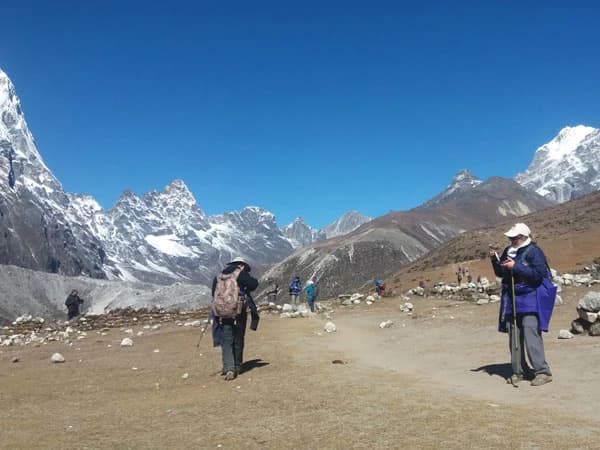
The real advantage is visibility. Post-monsoon air clarity in October is the best of the entire year. Mount Manaslu (8,163 meters), Himalchuli (7,893 meters), Ngadi Chuli (7,871 meters), and peaks of the Annapurna range are sharp against deep blue skies from almost every point on the trail.
Larkya La Pass conditions in mid-October are close to ideal. The trail surface is firm and dry. Morning crossings start before sunrise, around 4:30 AM, in temperatures of minus 8 to minus 10 degrees Celsius at Dharamsala. By mid-morning the sun hits the pass, and the views stretch 360 degrees.
The trade-off: October is busy. Teahouses between Samagaon and Bhimthang fill up. We book our groups' accommodation in advance for this stretch. Without reservations, you may find yourself sharing a dining room floor at Dharamsala. October also coincides with Dashain and Tihar, Nepal's biggest festivals. The villages along the route are alive with celebration, but some teahouse staff take holiday breaks. We plan around this.
September: The Quiet Start
September is a transition month. Rain tapers off by the third week, and the trails are still green and lush from the monsoon. Fewer trekkers are on the route, teahouses are uncrowded, and the air quality improves daily as the month progresses.
The risk: the first two weeks of September can still bring rain. Trails between Jagat and Philim may be muddy. River crossings run high. If you start too early, you may hit wet conditions in the lower sections. Our advice is to begin the trek no earlier than September 20. By then, conditions settle considerably.
Daytime temperatures sit between 10 and 15 degrees Celsius at higher altitudes. Nights run minus 2 to 5 degrees Celsius.
November: Cold but Clear
November extends the autumn window with continued dry weather and excellent visibility. The downside is cold. Nights above 4,000 meters now regularly drop below minus 10 degrees Celsius. By late November, snow starts appearing on the trail approaching Larkya La. Teahouses in the upper sections begin reducing staff or closing.
We generally recommend finishing the Larkya La crossing before mid-November. After that, conditions tighten. If you are a cold-weather trekker with proper gear, late November can be quiet and rewarding. But it is not for everyone.
Spring: The Second-Best Season (March to May)
April: Peak Spring
April is the strongest spring month for the Manaslu Circuit. The winter snow is melting, Larkya La Pass is accessible, and the days are warm at lower elevations, between 15 and 20 degrees Celsius. Nights at high camps still drop to minus 5 degrees Celsius, but the sleeping bag you carry should handle it.
The standout feature of spring on this route is rhododendron season. Between Deng and Lho, the forests turn red, pink, and white. The trail runs through dense rhododendron canopy, and in a good bloom year, it is one of the most vivid trekking experiences in Nepal. Our Manaslu groups in April consistently report the forest sections as a highlight.
April also coincides with the start of Manaslu expedition season. At Samagaon, you may see climbing teams staging gear for their summit attempts on Mt. Manaslu. It adds an interesting energy to the village.
Visibility in April is generally very good, though not quite as sharp as October. Occasional afternoon clouds build up, but mornings are clear.
March: Early Spring
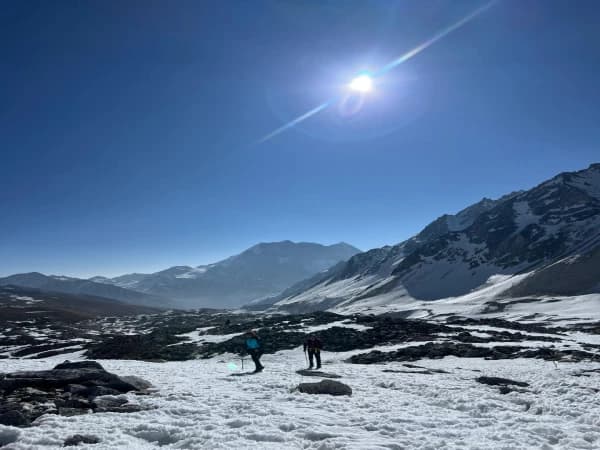
March is the start of spring trekking season. The weather warms progressively, but early March can still feel like winter above 4,000 meters. Snow may remain on the trail near Larkya La, and some teahouses in the upper section are only just reopening after winter closures.
From mid-March onward, conditions improve steadily. The permit fee for March falls under the off-peak rate (December to August), so you save on the Restricted Area Permit
Daytime temperatures range from 4 to 12 degrees Celsius. Nights drop to minus 6 to minus 12 degrees Celsius. Carry microspikes. Snow fields near the pass are common in March.
May: Late Spring
May is warmer, with daytime temperatures reaching 10 to 20 degrees Celsius. The lower sections of the trail, particularly between Soti Khola and Jagat, can feel hot. Pre-monsoon humidity builds in the afternoons, and occasional rain showers are possible. By late May, the monsoon edge creeps closer.
We run fewer Manaslu groups in May. The weather is less predictable than April, and the heat at lower elevations adds physical strain to the first few days of walking. If May is your only option, start early in the month.
Monsoon Season: Not Recommended (June to August)
We do not operate Manaslu Circuit treks during the monsoon. The reasons are practical, not just about comfort.
Rainfall in the Manaslu region exceeds 700 millimeters in July, concentrated heavily in the lower valleys between Soti Khola and Philim. Trails become muddy and unstable. The Budhi Gandaki River swells, making crossings hazardous. Landslides along the road between Arughat and Soti Khola have delayed our teams in past years by up to three days.
Leeches are active in the forested sections below 2,500 meters from June through August. Visibility is poor, with cloud cover blocking mountain views for days at a time
The higher sections around Samdo and Larkya La sit in a partial rain shadow and see less precipitation, but getting there through the lower valleys safely is the problem.
Winter: Possible but Risky (December to February)
December is the last month where the Manaslu Circuit is reasonably trekable, and even then, only for experienced groups with proper cold-weather gear.
By January, temperatures at Dharamsala drop below minus 15 to minus 20 degrees Celsius at night. The Larkya La Pass is often snow-covered and may be impassable. Most teahouses above Samagaon close for the winter. The lodge at Dharamsala shuts, which means the pass must be crossed in a single day from Samdo, a 10 to 12 hour push that is risky in deep snow.
We do not recommend winter Manaslu treks for most travelers. If you are set on it, contact Gokarna directly at +977 9851363944 to discuss conditions and feasibility for your specific dates.
What Permits Do You Need, and How Does Season Affect Cost?
The Manaslu Circuit is a restricted area. You cannot trek it independently. Nepal's Department of Immigration requires all trekkers to travel with a licensed trekking agency, in a group of at least two, with a licensed guide. We handle all permit processing from our office in Paknajol, Thamel.
Here is the permit breakdown (as of May 2026, verified against Department of Immigration fee schedules):
Manaslu Restricted Area Permit (RAP):
-
September to November (peak season): USD 100 per person for the first 7 days, plus USD 15 per day after that
-
December to August (off-peak): USD 75 per person for the first 7 days, plus USD 10 per day after tha
Manaslu Conservation Area Permit (MCAP): USD 30 per person, all seasons
Annapurna Conservation Area Permit (ACAP): USD 30 per person, all seasons (required because the trail exits through Dharapani into the Annapurna Conservation Area)
Chumnubri Rural Municipality Permit: NPR 1,000 per person
Total permit cost for a standard 12-day autumn trek: approximately USD 175 to USD 190 per person. Spring and winter treks cost slightly less due to the lower RAP fee.
Note: TIMS cards are not required for the Manaslu Circuit as of the 2024 to 2026 seasons. If any agency tells you otherwise, they are either misinformed or adding unnecessary charges. Permits must be processed in Kathmandu before you start. They cannot be obtained at Soti Khola or Arughat
Month-by-Month Quick Reference
|
Month
|
Recommended?
|
Daytime Temp (High Altitude)
|
Night Temp (High Altitude)
|
Larkya La Conditions
|
Crowds
|
|
January
|
No
|
-2 to 6 C
|
-15 to -20 C
|
Snow-covered, high risk
|
Almost none
|
|
February
|
No
|
0 to 8 C
|
-12 to -18 C
|
Snow-covered, risky
|
Very few
|
|
March
|
Yes (from mid-March)
|
4 to 12 C
|
-6 to -12 C
|
Snow possible, microspikes needed
|
Low
|
|
April
|
Yes
|
10 to 18 C
|
-3 to -8 C
|
Manageable, firm trail
|
Moderate
|
|
May
|
Conditional
|
10 to 20 C
|
0 to -5 C
|
Clear but pre-monsoon clouds
|
Moderate
|
|
June
|
No
|
15 to 22 C
|
2 to 5 C
|
Monsoon, unsafe approach
|
Almost none
|
|
July
|
No
|
15 to 25 C
|
3 to 8 C
|
Monsoon, trail closures
|
Almost none
|
|
August
|
No
|
15 to 22 C
|
2 to 6 C
|
Late monsoon, still risky
|
Very few
|
|
September
|
Yes (from late Sept)
|
10 to 15 C
|
-2 to 5 C
|
Clearing, good by late month
|
Low to moderate
|
|
October
|
Yes (best month)
|
10 to 15 C
|
-6 to -10 C
|
Dry, firm, ideal
|
High
|
|
November
|
Yes (until mid-Nov)
|
4 to 12 C
|
-8 to -15 C
|
Getting cold, snow possible
|
Moderate
|
|
December
|
Conditional
|
0 to 8 C
|
-10 to -18 C
|
Snow likely, teahouses closing
|
Very few
|
Temperatures are approximate for altitudes between 3,500 and 5,000 meters and vary by specific location on the trail.
Common Mistakes We See with Timing
Starting the trek too early in September. The monsoon does not switch off on September 1. We have had groups hit three straight days of rain between Machha Khola and Jagat because they started before September 20. Wait for the rain to clear.
Booking late November without cold-weather gear. Late November can feel like winter above Samagaon. We have seen trekkers arrive with sleeping bags rated to minus 5 and then struggle badly at Dharamsala where it drops well below minus 10. If you trek in November, your gear needs to match December-level cold.
Assuming May is "spring." By mid-May, the pre-monsoon humidity is real. The lower trail sections are hot. The afternoon clouds reduce mountain visibility. April is the better spring choice by a significant margin.
Ignoring the permit processing timeline. In October, the Department of Immigration office in Kathmandu is overwhelmed. Permit processing that normally takes one to two business days can stretch to three or four days. We start processing permits at least two weeks before trek start dates during peak season. If your agency waits until the last minute, your departure could be delayed.
Forgetting that Manaslu is remote. If something goes wrong on the trail, helicopter evacuation above Samagaon can be delayed by weather. In October, this is rarely an issue. In monsoon or winter, rescue flights may not be possible for days. Your travel insurance must cover helicopter evacuation up to 6,000 meters. We check every client's insurance policy before departure.
FAQ
What is the single best month for the Manaslu Circuit Trek?
October. The weather is the most stable, visibility is the sharpest, Larkya La Pass is at peak conditions, and all teahouses along the route are open and staffed. April is the best spring option.
Can I trek the Manaslu Circuit alone?
No. The Manaslu region is classified as a restricted area by the Nepal government. You must trek with a licensed trekking agency, in a group of at least two trekkers, with a licensed guide. We can pair solo travelers with other trekkers to meet this requirement. Contact Gokarna at [email protected].
Is the Manaslu Circuit Trek harder than the Annapurna Circuit?
The Larkya La Pass crossing is widely considered harder than the Thorong La crossing on the Annapurna Circuit. The approach is longer, the terrain through the glacier moraine is more demanding, and the Manaslu region is more remote with fewer escape routes. We recommend completing a trek like our Annapurna Base Camp Trek first if you have no high-altitude experience.
How much does the Manaslu Circuit Trek cost?
Our 12-day Manaslu Circuit Trek package starts from USD 1060 per person, which includes permits, licensed guide, porter, meals, accommodation in teahouses, and transportation from Kathmandu. Exact pricing depends on group size and season. See our full Manaslu Circuit Trek itinerary and pricing on regalnepaltreks.com.
Do I need crampons for the Larkya La Pass?
In spring (March to April), yes. Snow fields remain near the pass and microspikes or crampons are recommended. In October, probably not, but carry microspikes anyway. Snow can arrive without warning at 5,000 meters. Our guides carry spare microspikes for the group and make the final call on the morning of the crossing.
How do I get to the Manaslu Circuit trailhead?
We drive our groups from Kathmandu to Soti Khola in a private jeep, not a tourist bus. The drive takes about 7 to 8 hours via Arughat. The road has improved in recent years but the final stretch is rough and a jeep is necessary. We include this transport in our package. On the return, the trail exits at Dharapani, from where we arrange jeep transport to Besisahar and onward to Kathmandu or Pokhara.
Is the Manaslu Circuit Trek safe after the 2015 earthquake?
Yes. The trails through the Manaslu Conservation Area have been rebuilt and maintained. Teahouses in Samagaon, Samdo, and other villages have been reconstructed. Amrit Khadka, our operations manager, does a trail assessment each spring season. As of our last groups in autumn 2025, the trail is in good condition throughout.
Ready to Book?
Check our 12-day Manaslu Circuit Trek itinerary and pricing. For custom dates or questions about trail conditions for your specific travel month, reach Gokarna directly on WhatsApp at +977 9851363944 or email [email protected]. We are in the office at Paknajol 16, Thamel, Kathmandu, and someone on the team responds within a few hours.