Can You Trek the Manaslu Circuit Solo?
Yes, with one essential condition: you must trek with a government-licensed guide arranged through a registered Nepali trekking agency. Solo trekking on Manaslu means traveling as a single foreign trekker with a personal guide, not walking independently without any support. The distinction matters because the two experiences are very different.
What changed in March 2026?
Before March 22, 2026, the MRAP required a minimum of two foreign trekkers on the same application. Solo travelers had two workarounds: join a group, join a departure or have a trekking agency pair them with another solo trekker on paper for the permit application, even if they walked separately on the trail.
Nepal's Department of Immigration removed the two-person minimum requirement in March 2026. Individual solo trekkers can now apply for the MRAP directly through a registered agency without finding a trekking partner. The application requires your name, your dates, and your licensed guide's registration number. The cost is the same whether you trek solo or in a group.
What has not changed?
Three things remain firm regardless of the 2026 update:
-
A licensed guide is still mandatory. Your guide must be government-certified with credentials verified by NATHM (Nepal Academy of Tourism and Hotel Management). A Nepali friend, a porter, or a person without a license cannot legally serve as your guide on the Manaslu Circuit.
-
Permits must be arranged through a registered agency. Individual trekkers cannot apply directly to the Department of Immigration for MRAP. A registered Nepali trekking company processes the application on your behalf.
-
Checkpoints enforce compliance. There are multiple permit verification checkpoints along the Manaslu route at Jagat, Namrung, Samagaon, and Samdo. At each checkpoint, your guide's credentials are verified alongside your permit. Trekkers without a licensed guide face fines, forced return, or deportation.
What does solo trekking on Manaslu actually feel like now?
Solo trekking on Manaslu post-March 2026 means you travel with one guide, no group. You set your own departure time each morning. You stop when you want to stop. You add acclimatization days when your body needs them without consulting anyone else's schedule. You eat what you want at whatever pace you prefer. The guide manages logistics, permits, tea house bookings, and altitude monitoring. You focus on the walk.
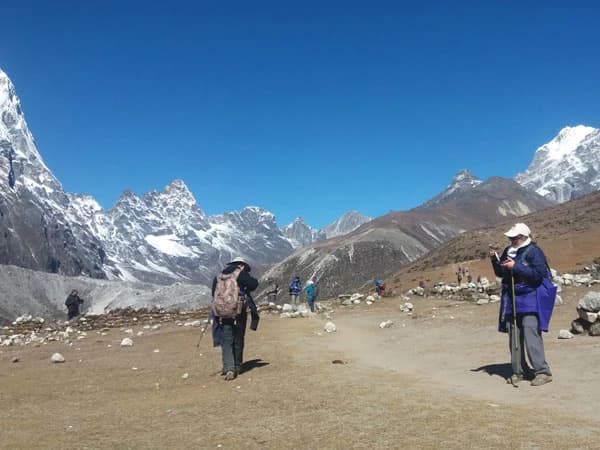
For solo trekkers who find group join departures difficult to fit their travel style, this is a genuinely different experience. The trail is quiet. You encounter other trekkers at tea houses in the evenings. During the walking day, you have the Budhi Gandaki valley and the mountain faces largely to yourself.
Why Manaslu Is a Restricted Area and What That Means for Solo Trekkers
The Manaslu Circuit Trek sits inside a restricted trekking zone for specific reasons that directly affect solo trekkers' safety planning.
Why the restricted area designation exists
The Manaslu region borders Tibet (China) along its northern boundary. Six Village Development Committees within the circuit share territory with the Nepal-Tibet border. The restricted area designation exists to protect the fragile Manaslu Conservation Area ecosystem, preserve the Tibetan Buddhist cultural heritage of communities like Samagaon and Samdo, manage border security in a sensitive geographic zone, and ensure that trekkers in remote terrain have appropriate support if emergencies arise.
The permit system is enforced, not advisory. Our guides at Regal Nepal Treks regularly pass through four checkpoint stations where both permits and guide credentials are physically verified. Trekkers found without proper documentation do not continue. They are returned.
What permits does a solo trekker need on Manaslu?
Solo trekkers on the Manaslu Circuit need three permits:
|
Permit
|
Issuing Authority
|
Cost (Peak Season)
|
Cost (Off-Peak)
|
|
Manaslu Restricted Area Permit (MRAP)
|
Nepal Dept. of Immigration via registered agency
|
$100 per person for the first 7 days + $15/additional day
|
$75 per person for first 7 days + $10/additional day
|
|
Manaslu Conservation Area Permit (MCAP)
|
Manaslu Conservation Area Project (MCAP office)
|
$30 per person
|
$30 per person
|
|
Annapurna Conservation Area Permit (ACAP)
|
Annapurna Conservation Area Project
|
$30 per person
|
$30 per person
|
Peak season is defined as September through November and March through May. ACAP is required because the standard Manaslu Circuit exit route through Dharapani enters the Annapurna Conservation Area. Note: TIMS (Trekkers' Information Management System) card is NOT required for the Manaslu Circuit, unlike many other Nepal treks.
Regal Nepal Treks processes all three permits in Kathmandu before your departure. You do not arrange these separately.
What happens at permit checkpoints?
Checkpoints at Jagat, Namrung, Samagaon, and Samdo verify your MRAP, MCAP, and your guide's government license number. Carry photocopies as backup. The original MRAP must be presented at every checkpoint. Your guide carries the originals during the trek and manages all checkpoint entries. Solo trekkers should be aware that permits are non-refundable and non-transferable once issued. If you cannot start your trek on the registered date, contact your agency immediately to assess options.
How Difficult Is the Manaslu Circuit Trek for Solo Trekkers?
Difficulty on Manaslu does not change based on whether you are in a group or alone. The route, the altitude, and the physical demands are identical. What changes is the support structure around you when conditions get hard.
What makes Manaslu genuinely difficult at any group size
The Manaslu Circuit Trek is classified as moderate to strenuous. You walk six to nine hours per day on most days. The trail climbs from Machha Khola at 900 meters to Larkya La Pass at 5,106 meters over 10 to 12 trekking days. Total elevation change across the circuit exceeds 20,000 meters combined. The route passes through the Budhi Gandaki valley on steep trail sections, crosses multiple suspension bridges, and navigates landslide-prone gorge sections between Soti Khola and Jagat.
The Larkya La Pass crossing is the hardest single day. You leave Dharamsala at 4,460 meters between 3:30 and 4:00 a.m. The climb gains 650 meters over rocky terrain in darkness. At the summit, the air has roughly 50 percent less oxygen than at sea level. The descent to Bimthang at 3,720 meters drops 1,400 meters on steep, knee-intensive ground. The day takes 10 to 11 hours total.
How solo trekking changes the difficulty equation
In a group, you have visible reference points for your own condition. If everyone around you is struggling equally, it normalizes the experience. If you are noticeably behind the group, it prompts attention. Alone, you lose those reference points. Your self-assessment of how you are doing becomes your primary feedback mechanism. At an altitude above 3,500 meters, self-assessment is compromised because cognitive function is one of the first things affected by hypoxia.
This is the specific reason why your guide's altitude monitoring role is more critical for solo trekkers than for group trekkers. In a group, multiple people cross-check each other's conditions. When you are alone with your guide, the guide is the only external observer of your physical state.
Altitude sickness risk for solo trekkers on Manaslu
Acute Mountain Sickness (AMS) does not discriminate by group size, fitness level, or experience. The risk factors are ascent rate, sleeping altitude, and individual physiological response to reduced oxygen. Above 3,000 meters, oxygen saturation in healthy adults typically drops to 85 to 92 percent. Above 4,000 meters, it can fall further. A reading below 80 percent at rest is a warning sign requiring medical attention.
AMS risk stages on the Manaslu Circuit:
|
Route Section
|
Elevation
|
AMS Risk Level
|
Key Vulnerability
|
|
Machha Khola to Deng
|
900 to 1,860m
|
Low
|
None significant
|
|
Deng to Namrung
|
1,860 to 2,630m
|
Low to moderate
|
Altitude gain beginning
|
|
Namrung to Samagaon
|
2,630 to 3,530m
|
Moderate
|
First high-altitude sleep
|
|
Samagaon to Samdo
|
3,530 to 3,860m
|
Moderate to high
|
Multiple nights above 3,500m
|
|
Samdo to Dharamsala
|
3,860 to 4,460m
|
High
|
Pre-pass exposure
|
|
Larkya La Pass
|
5,106m
|
Very high
|
Peak altitude, 50% oxygen reduction
|
Solo trekkers on Manaslu face the same AMS risks as group trekkers. The difference is that without a guide carrying a pulse oximeter and checking readings daily, solo trekkers must rely on symptom self-reporting. At altitude, this is unreliable. Our guides at Regal Nepal Treks check oxygen saturation for every trekker, including solo clients, at every rest stop above 3,500 meters and every morning before departure.
Is Trekking Manaslu Solo Safe?
The honest answer is: solo trekking on Manaslu is safe with an experienced licensed guide, realistic acclimatization planning, proper gear, and travel insurance covering helicopter evacuation above 5,000 meters. Without those conditions, it is not.
What makes Manaslu more serious than other Nepal treks for solo trekkers
Once you pass Jagat on day three of the trek, you are committed to the route. There are no road exits through the upper Manaslu circuit. The trail between Jagat and Dharapani is a single-direction circuit without practical early exit options. If you need to turn back, you walk back the way you came, which is itself a multi-day undertaking. For solo trekkers, this commitment to the route means that problems cannot be managed by simply calling a taxi or catching a bus.
Medical facilities do not exist above Machha Khola on the Manaslu route. The nearest hospital with relevant capabilities is in Kathmandu. Helicopter evacuation from the upper circuit costs $3,000 to $6,000 USD, depending on pickup elevation and weather availability. Travel insurance covering helicopter evacuation above 5,000 meters is mandatory for all Regal Nepal Treks clients on Manaslu, solo or group. We verify insurance documentation before your trek begins.
What a licensed guide provides that protects solo trekkers specifically
For solo trekkers, the guide's role expands beyond what it covers in a group setting:
Altitude monitoring: Your guide carries a pulse oximeter and checks your saturation reading daily. A saturation drop from 92 to 85 over two nights is clinically significant, even if you feel acceptable. Your guide catches this trend. You likely do not.
Weather decision-making on Larkya La: The pass crossing decision requires reading local weather patterns, not just checking a weather app. Our guides know which cloud formation direction over the southern face of Manaslu indicates deteriorating afternoon conditions. They know the difference between a cold, still morning that is safe to start and a cold still morning that will turn dangerous by 10 a.m. on the pass. This judgment cannot be learned from a trail description.
Tea house logistics: During the October peak season, accommodation at Samagaon and Dharamsala fills up. Solo trekkers without pre-booked rooms arrive after a long trekking day to find nothing available. Our guides pre-book from Kathmandu before departure. This is not a minor comfort issue. Arriving at Dharamsala to find no room the night before the Larkya La crossing is a safety problem, not just an inconvenience.
Emergency coordination: If you fall sick or are injured on the upper circuit, your guide initiates emergency response. They use satellite communication to contact helicopter services in Kathmandu, assess landing zone options near your location, and manage the evacuation while keeping you stable. A solo trekker without a guide in this situation has a satellite communicator, a limited ability to communicate in Nepali, no pre-established relationships with rescue services, and no local knowledge of landing zones.
What solo trekkers usually underestimate about Manaslu
Every season, the pattern is consistent. Solo trekkers who have completed other Nepal treks independently (Everest Base Camp, Annapurna Circuit) sometimes assume Manaslu is a similar caliber of challenge. It is not. The infrastructure gap between those routes and Manaslu is significant. Everest and Annapurna have road access at multiple points, functioning lodges with consistent staff, reliable satellite WiFi, and more active rescue infrastructure. Manaslu above Namrung has almost none of this. The remoteness is the appeal. It is also a risk.
Solo Trekking Manaslu vs Group Join Trek: Which Suits You?
This is now a genuine choice rather than a forced decision. The 2026 regulation change makes private solo trekking with your own guide a real option for the first time. Here is how the two formats compare.
|
Factor
|
Private Solo Trek
|
Group Join Trek
|
|
Schedule flexibility
|
Full flexibility, your pace
|
Fixed departure dates and daily schedule
|
|
Cost per person
|
Higher (guide cost not shared)
|
Lower (shared guide and logistics costs)
|
|
Itinerary customization
|
Fully customizable, add days freely
|
Standard itinerary with limited adjustment
|
|
Social experience
|
Guide relationship only, quiet trail
|
Meet other trekkers, shared evenings
|
|
Acclimatization
|
Fully personal, rest days on demand
|
Group-paced, rest days by consensus
|
|
Best for
|
Experienced solo travelers, flexible budget, specific timeline
|
Budget-conscious trekkers, first-timers, social trekkers
|
|
Typical cost range
|
$1,200 to $1,800 per person
|
$900 to $1,250 per person
|
When private solo trekking on Manaslu makes sense
Private solo trekking suits you if you have experience with high-altitude trekking and understand your own altitude response, you want to walk at your own pace without adjusting to others, your travel dates do not align with fixed group departures, or you specifically value the quiet experience of just you and a guide on the trail without social obligations in the evenings.
When a group joins, trekking makes more sense
Group join trek suits you if this is your first high-altitude trek in Nepal and you want more support structure, you are cost-conscious, and the per-person saving from sharing guide costs matters, or you are a solo traveler who actually enjoys meeting other trekkers and prefers the social atmosphere of shared evenings in mountain tea houses.
At Regal Nepal Treks, we offer both formats. For solo trekkers unsure which to choose, our pre-booking consultation discusses your altitude experience, travel dates, and what kind of experience you are looking for before making a recommendation.
What Solo Trekkers Should Know About Manaslu Tea House Trekking
The tea house system on the Manaslu Circuit works well for solo trekkers but requires specific awareness above Samagaon that group trekkers do not face as sharply.
How tea house availability affects solo planning
Tea houses on Manaslu are smaller and have fewer rooms than lodges on the Everest or Annapurna routes. During the October peak season, Samagaon and Dharamsala (Larkya Phedi) fill up. A solo trekker arriving without reservations in mid-October at either location may find limited options. Our guides pre-book at all key stops before departure. This is handled as part of your Regal Nepal Treks package, not something you coordinate yourself.
What tea house rooms are like for solo trekkers
Rooms are simple: a small space with one or two beds, a thin pillow, and a blanket. Single occupancy is the norm for solo trekkers. At lower elevations below 3,000 meters, rooms are slightly more comfortable. Above Namrung, rooms become progressively simpler. At Dharamsala, expect the most basic accommodation on the circuit: minimal bedding, no heating, shared facilities. Bring a sleeping bag rated to minus 10 degrees Celsius, regardless of your traveling style.
Tea house dining halls are communal. As a solo trekker, you eat in the shared space with whoever else is at that stop. This is where most solo trekkers naturally meet other travelers and have the social interaction that the trail itself does not provide during walking hours. Many solo trekkers describe the communal tea house evenings as unexpectedly enjoyable rather than isolating.
Food, cash, and connectivity realities for solo trekkers
Dal bhat is the most reliable and calorie-dense meal on the circuit. Bring enough Nepali rupees in cash from Kathmandu to cover all meals, hot showers (2 to 3 USD per shower below Samagaon), device charging (1 to 2 USD per hour), and emergency incidentals for the full trek duration. There are no ATMs anywhere in the Manaslu Conservation Area. Your guide cannot lend you cash in emergencies. Plan your cash supply before the trailhead.
WiFi exists at some lodges between Machha Khola and Samagaon. Above Samagaon, internet access becomes unreliable or absent. NTC mobile data has some coverage in the lower villages and a patchy signal at Samagaon. Above Samdo, assume no connectivity. Download offline maps (Maps.me or OsmAnd) and any media you need before leaving Kathmandu. Your guide carries a satellite communication device for emergencies.
Acclimatization Planning for Solo Trekkers on Manaslu
Solo trekkers have an advantage over group trekkers: you can add acclimatization days without negotiating with anyone else. If your body needs an extra day at Samagaon, you take it. This flexibility is genuinely valuable on a route where acclimatization quality determines pass day outcome.
Recommended acclimatization schedule for solo trekkers
|
Stop
|
Elevation
|
Recommended Stay
|
Acclimatization Activity
|
|
Samagaon
|
3,530m
|
2 nights minimum
|
Day hike to Pungyen Gompa (4,000m) or Manaslu Base Camp viewpoint (4,800m)
|
|
Samdo
|
3,860m
|
1 night standard, 2 if readings are low
|
Short acclimatization hike toward the Tibet border ridge
|
|
Dharamsala
|
4,460m
|
1 night (early departure next morning)
|
Rest, hydrate, and prepare gear for pass day
|
The "climb high, sleep low" principle applies throughout. On your Samagaon acclimatization day, the hike to Pungyen Gompa at around 4,000 meters and return to sleep at 3,530 meters gives your body meaningful altitude exposure without committing to a higher sleeping elevation. The Manaslu Base Camp viewpoint hike takes you toward 4,800 meters and back, which is excellent preparation for Larkya La if your saturation readings are good.
When solo trekkers should add extra acclimatization days
Add an extra rest day if your resting oxygen saturation drops below 85 percent at your current sleeping elevation, you wake with a persistent headache that does not improve within two hours, your appetite is completely absent after two consecutive days at the same elevation, or your resting heart rate is elevated above your personal normal by more than 20 beats per minute.
Your guide monitors all of these indicators and will recommend a rest day before you may recognize the need yourself. Solo trekkers who follow their guide's acclimatization advice complete Manaslu at consistently higher rates than those who push to keep a fixed schedule.
Diamox and altitude medication for solo trekkers
Diamox (Acetazolamide) is a carbonic anhydrase inhibitor that helps the body acclimatize by increasing breathing rate and speeding the kidneys' adjustment to altitude. It is not a substitute for proper acclimatization, but it is a useful prophylactic for trekkers prone to AMS or those on tighter itineraries. Consult your doctor before the trek. A common preventive dose is 125mg twice daily, starting one day before ascending above 2,500 meters. Carry it in your medical kit, whether or not you plan to use it routinely. Your guide carries dexamethasone for emergency AMS use at Regal Nepal Treks.
What Does a Private Solo Trek on Manaslu Actually Cost?
Solo trekking in Manaslu costs more per person than group join trekking because you bear the full cost of your licensed guide rather than splitting it with others. Here is an honest breakdown.
Cost breakdown for a private 14-day solo Manaslu trek
|
Cost Item
|
Amount (USD)
|
|
Manaslu Restricted Area Permit (MRAP, 14 days peak)
|
$100 + (7 x $15) = $205
|
|
Manaslu Conservation Area Permit (MCAP)
|
$30
|
|
Annapurna Conservation Area Permit (ACAP)
|
$30
|
|
Licensed guide fee (14 days at $25-35/day)
|
$350 to $490
|
|
Porter fee (recommended, 14 days at $20-25/day)
|
$280 to $350
|
|
Tea house accommodation (14 nights avg $8-15/night)
|
$112 to $210
|
|
Meals on trail (14 days, 2 meals/day avg $7-10/meal)
|
$196 to $280
|
|
Jeep transport (Kathmandu to Machha Khola, return)
|
$80 to $120 (shared or private)
|
|
Travel insurance (mandatory, helicopter cover above 5,000m)
|
$80 to $150
|
|
Estimated Total
|
$1,363 to $1,865
|
This is your field cost. A full package from Regal Nepal Treks that covers permits, a licensed guide, porter, transport, and tea house bookings typically runs $1,200 to $1,800 per person for a 14-day solo trek. The package price is usually comparable to or slightly below self-arranging every item individually, because we have established rates with tea houses and transport partners.
Why hiring a porter is recommended even as a solo trekker
Many solo trekkers assume that because they are alone, they can manage their own pack for 14 days. The math does not support this for most trekkers. A full trekking pack of 12 to 15 kilograms carried for 6 to 9 hours at an altitude above 3,500 meters drains energy reserves that your body needs for acclimatization. A porter carries your main bag for $20 to $25 per day. You carry a day pack of 5 to 7 kilograms with water, snacks, a layer, and your camera. The energy savings over 14 days of high-altitude trekking are significant and directly improve your chance of completing the circuit.
Larkya La Pass for Solo Trekkers: What You Need to Know
Larkya La Pass at 5,106 meters is the hardest single day on the Manaslu Circuit. For solo trekkers, the specific dynamics of this day are worth understanding in detail.
The timeline of the past day
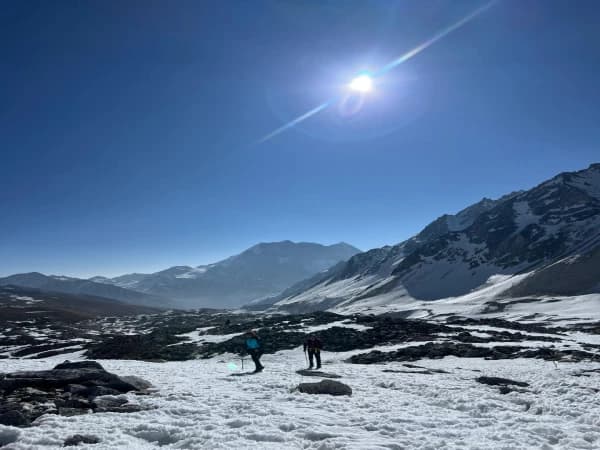
You leave Dharamsala between 3:30 and 4:00 a.m. in complete darkness. A headlamp with fresh lithium batteries (not alkaline, which drain fast in cold) is mandatory. The first two hours involve a rocky ascent in the dark. At around 4,800 meters, the trail becomes more exposed and in some seasons icy before full sunrise. The summit ridge at 5,106 meters is reached typically between 7:30 and 9:00 a.m. Views from the top include Himlung Himal at 7,126 meters, Cheo Himal at 6,820 meters, and the northern Annapurna massif. The descent to Bimthang takes three to four more hours on steep, loose terrain.
What solo trekkers need to carry on a pass day
-
All insulation layers (down jacket, thermal base, fleece, waterproof shell)
-
Insulated waterproof gloves (not liner gloves alone)
-
Warm hat and neck gaiter or balaclava
-
UV-protective sunglasses (mandatory once sunrise hits the snow)
-
Trekking poles (critically important on the Bimthang descent)
-
Minimum two liters of water plus electrolyte tablets
-
High-calorie snacks that do not freeze solid: chocolate, nuts, glucose tablets, energy bars
-
Headlamp with spare lithium batteries
-
Personal pulse oximeter (check before departure and at summit)
How your guide manages pass day for solo trekkers
Three days before the scheduled crossing, your guide begins assessing weather conditions. They monitor cloud formation direction over the Manaslu southern face, check temperature drops at Samdo the nights before, and communicate with guides already on the route ahead. The morning of crossing, they check your oxygen saturation at Dharamsala before departure. If conditions or your saturation are marginal, they delay. This decision is made without pressure from other group members or schedule anxiety. Solo trekking makes this call cleaner and more responsive to your specific condition.
Common Mistakes Solo Trekkers Make on the Manaslu Circuit
Solo trekkers on Manaslu commonly make mistakes like choosing rushed itineraries, trekking with unlicensed staff, underestimating altitude fatigue, and buying insurance without 5,000m+ evacuation coverage. Most problems on the circuit come from poor acclimatization and weak planning, not trail difficulty alone.
Ignoring the permit system and attempting independent entry
Some trekkers attempt to enter the Manaslu restricted zone with incomplete permits or without a licensed guide, having heard that checkpoint enforcement is inconsistent. It is not. Checkpoints at Jagat, Namrung, and Samagaon verify both permit documents and guide credentials. Trekkers found non-compliant are returned and face fines. The risk is not worth the permit cost savings.
Using a porter as a de facto guide
A porter without a government guide license cannot legally serve as your guide on the Manaslu Circuit. Some budget operators assign unlicensed staff to this role. The consequence if discovered at a checkpoint is forced return from the route. Beyond legal risk, an unlicensed guide lacks the altitude monitoring training, emergency protocols, and route-specific knowledge that make the guide requirement a safety measure rather than just a revenue mechanism.
Choosing a 10 or 12-day itinerary to save time
A 10-day Manaslu itinerary contains zero acclimatization days. Research on AMS outcomes on high-altitude treks consistently shows that trekkers on compressed itineraries have significantly higher rates of altitude-related problems and route failures. The time saved by a shorter itinerary is almost always lost to forced rest days from AMS or early exit due to developing symptoms. A 14 to 16-day schedule with rest days at Samagaon is the baseline for safe solo trekking on this route.
Not buying adequate travel insurance before departure
Helicopter evacuation from the Manaslu restricted area costs $3,000 to $6,000 USD. Some policies cover up to 5,000 meters but not above. Larkya La is at 5,106 meters. Read your policy altitude ceiling carefully before purchasing. Insurance that covers up to 6,000 meters is appropriate for the Manaslu Circuit. Regal Nepal Treks verifies insurance documentation before your trek begins. We will not send trekkers onto this route without appropriate coverage.
Underestimating the recovery demand of consecutive days at altitude
Many solo trekkers who have done short high-altitude days (a single summit hike, an acclimatization day hike) underestimate what seven to ten consecutive days above 3,000 meters feels like. Cumulative fatigue at altitude is different from single-day high-altitude exertion. By day eight above 3,000 meters, even well-acclimatized trekkers feel the accumulated cost. Rest days are not optional comfort days. They are the physiological repair time.
Cultural Experience of Solo Trekking Manaslu
Solo trekking on Manaslu offers a quieter and more personal cultural experience than crowded Nepal trekking routes. Walking with a private guide gives you more time to interact with local villages, monasteries, and Tibetan-influenced communities while still meeting other trekkers naturally in tea houses each evening.
What you see that group trekkers often miss
Solo trekking on Manaslu with a private guide creates conditions for cultural depth that group dynamics can dilute. Moving at your own pace through Samagaon, you can stop without a group waiting behind you. You can sit at a monastery entrance and watch morning prayer routines without feeling like you are holding the group. You can ask your guide extended questions about what you are seeing without a group's attention fragmenting the conversation.
The villages along the Manaslu route
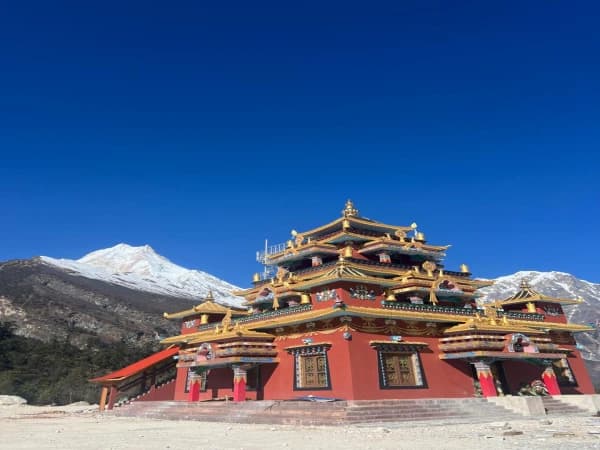
The trail passes through communities shaped by Tibetan Buddhist heritage and centuries of geographic isolation. Jagat in the Budhi Gandaki valley feels transitional, part of the Gurung-influenced lower zone. As you climb toward Lho, Samagaon, and Samdo, the Tibetan influence becomes dominant in architecture, language, monastery design, and daily practice. Ribung Gompa in Lho, Pungyen Gompa above Samagaon, and the monastery at Samdo are living religious sites, not heritage exhibits. They are active, and your guide provides access and context that solo walking cannot.
Meeting other trekkers as a solo traveler
Solo trekkers on Manaslu are not isolated. The tea house dining hall becomes a natural social space each evening. You meet other trekkers, guides, and occasionally local families who use the same lodges. Many solo trekkers describe meeting people in Manaslu tea houses as more genuine than encounters on crowded Everest or Annapurna routes, partly because the smaller number of trekkers means conversations are not competing for space with fifty other people.
Best Time for a Solo Manaslu Trek
The season choice for solo trekking Manaslu is the same as for group trekking, with one additional consideration: peak season booking pressure matters more for solo trekkers because pre-booking tea houses is more critical when you are not part of a managed group departure.
Autumn (September to November)
October is the best single month for Manaslu trekking across all formats. Post-monsoon air is clear, views of Manaslu's 8,163-meter summit and surrounding peaks are at their sharpest, and trail conditions are stable. Book your solo departure at least six to eight weeks ahead for October departures. The MRAP costs $100 per person for the first seven days plus $15 per additional day in peak season. Solo permits now process individually under the 2026 rules.
Late September departures offer slightly less crowd pressure at tea houses with weather that remains generally good. November departures require warmer gear and a sleeping bag rated to minus 10 to minus 15 degrees Celsius for the upper circuit.
Spring (March to May)
April is the most reliable spring month for solo trekking. Rhododendron forests below 3,500 meters bloom through March and April, adding visual interest to the lower sections that autumn does not offer. March departures may encounter heavier snow on the Larkya La approach, remaining from winter. April offers more stable pass conditions. May is warmer at lower elevations but brings increasing afternoon cloud development above 4,000 meters.
Seasons to avoid for solo trekkers
June to August (monsoon): Sustained rain, leeches on lower trail sections, high landslide risk in the Budhi Gandaki gorge, and complete loss of mountain views. Tea houses above Namrung are open, but conditions are genuinely difficult. Regal Nepal Treks does not schedule solo Manaslu departures during the monsoon.
December to February (winter): Snow depth above 3,500 meters can make Larkya La uncrossable without mountaineering equipment. Most tea houses above Namrung close by late November. This season is not appropriate for solo trekkers without winter mountaineering experience.
How Regal Nepal Treks Organizes Private Solo Manaslu Treks
At Regal Nepal Treks, organizing a private solo Manaslu Circuit trek involves five steps before you depart from Kathmandu.
Step 1: Pre-booking consultation. We discuss your altitude experience, fitness level, travel dates, and what you want the experience to feel like. If this is your first high-altitude trek, we recommend a 16-day itinerary with two rest days at Samagaon. If you have completed other high-altitude circuits, a 14-day itinerary with one Samagaon rest day is standard.
Step 2: Permit processing. We process your MRAP, MCAP, and ACAP in Kathmandu. With the March 2026 regulation change, individual solo permits are now processed directly. Processing takes one to two working days in standard conditions, longer during peak October booking periods. Arrange permits at least two weeks before departure in October.
Step 3: Guide and porter assignment. We assign a government-licensed, English-speaking guide with Manaslu-specific experience. For solo trekkers, we specifically assign guides who have completed a minimum of eight Manaslu Circuit departures across at least two seasons. We also assign a personal porter unless you specifically request to carry your own bag.
Step 4: Pre-trek briefing in Kathmandu. Before you head to the trailhead, your guide conducts a full briefing covering: route overview day by day, altitude strategy and acclimatization protocol, gear review (we check your kit and flag missing critical items), permit and checkpoint process, and emergency protocols including communication and evacuation procedures.
Step 5: Jeep transport to Machha Khola. We arrange your jeep transfer from Kathmandu to Machha Khola (seven to eight hours) on day one of your itinerary. The return transfer from Besisahar or Dharapani at the circuit exit is arranged before departure.
From Machha Khola forward, your guide manages every logistical detail: checkpoint registrations, tea house arrangements, pace setting, altitude monitoring, and pass day preparation. You walk.
FAQs About Manaslu Circuit Trek Solo
Can I trek the Manaslu Circuit completely alone in 2026?
No. Solo trekkers can now apply for permits individually, but a licensed guide is still legally required on the Manaslu Circuit.
Is a guide mandatory for the Manaslu Circuit Trek?
Yes. Nepal requires all foreign trekkers on Manaslu to trek with a government-licensed guide through a registered agency.
How difficult is the Manaslu Circuit Trek for solo trekkers?
Manaslu is a moderate to strenuous high-altitude trek with long walking days and a demanding Larkya La Pass crossing at 5,106m.
What permits does a solo trekker need for Manaslu?
Solo trekkers need the MRAP, MCAP, and ACAP permits. All are arranged through a registered Nepali trekking agency.
What is the best season for solo trekking on Manaslu?
October offers the best weather and visibility, while April is the most reliable spring season for solo trekking.